


Understanding Total Dissolved Solids for Better Brewing
TDS stands for Total Dissolved Solids, which represents the total amount of coffee compounds dissolved in your brewed coffee. It is usually expressed as a percentage (%) of the beverage’s weight.
What Does TDS Measure in Coffee?
When brewing coffee, water extracts various compounds from the grounds, including:
• Acids
• Sugars
• Oils
• Bitter compounds
TDS measures the concentration of these dissolved solids in the final cup.
Simply put, TDS tells you how strong or weak your coffee tastes, but it does not indicate how well the coffee was extracted.
Easy Example
• A cup of coffee with TDS = 1.35% means 1.35% of the beverage’s weight is dissolved coffee solids, the rest is water.
• Espresso usually has a high TDS (8–12%)
• Pour-over or filter coffee has a lower TDS (1.15–1.45%)
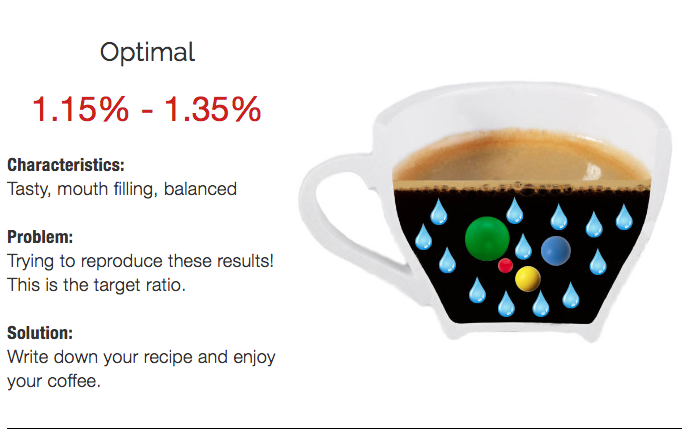
Ideal TDS in Espresso. source: Handground
TDS vs Extraction Yield
Many people confuse these two terms:
| Concept | What It Shows |
| TDS | How strong or weak the coffee tastes |
| Extraction Yield | How much flavor was extracted from the grounds |
You can have:
• High TDS but poor extraction → strong but sour or harsh
• Low TDS but good extraction → light but balanced
How to Measure TDS
TDS is usually measured with a refractometer, a device that analyzes the refractive index of a liquid to estimate dissolved solids. It is commonly used in:
• Specialty coffee shops
• Coffee labs
• Barista training programs
Leave a Reply