


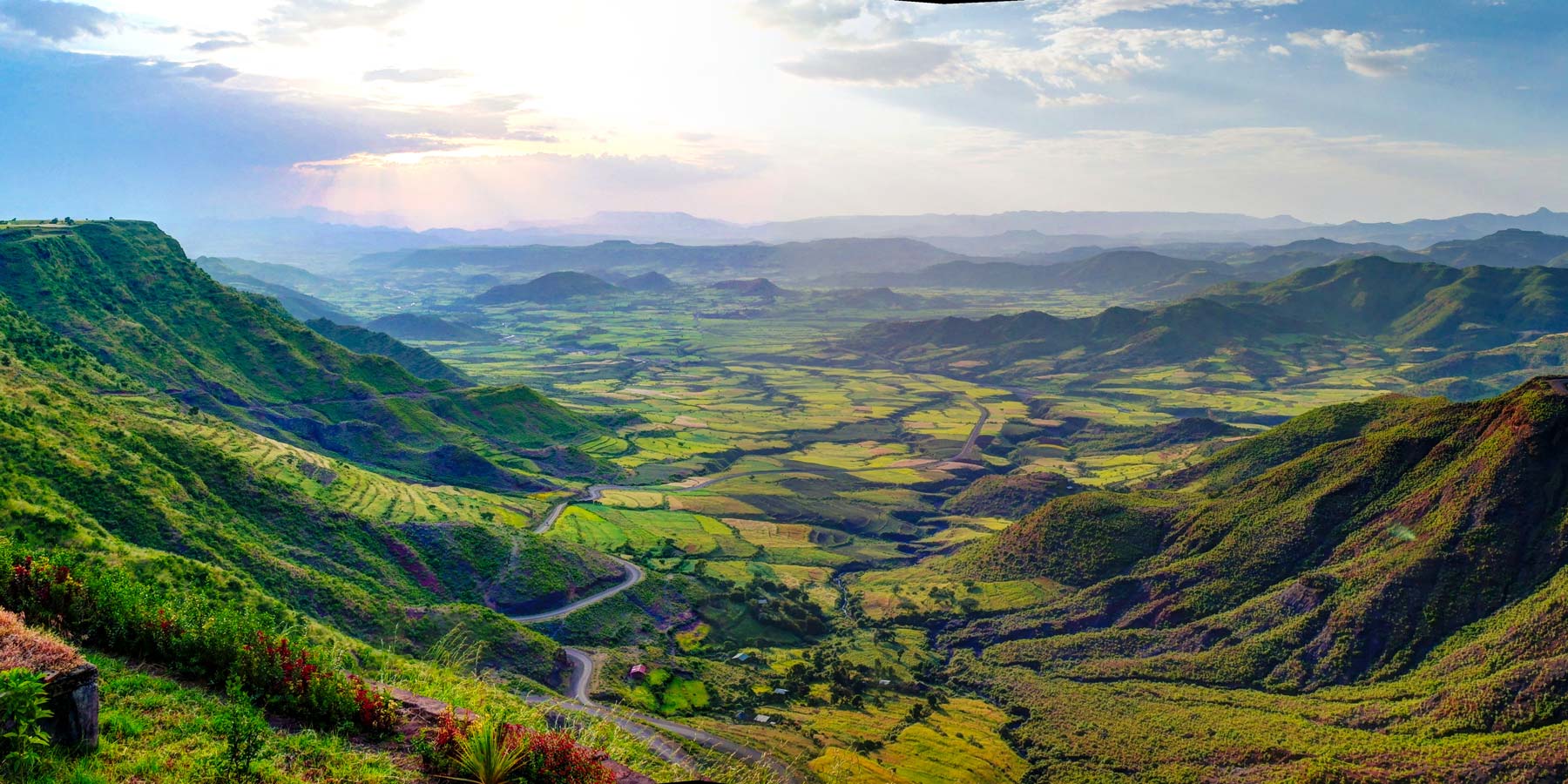
Before coffee reaches your cup, it starts as a red cherry hanging on a mountain branch. The altitude where that tree grows — whether high in the Andes or low in tropical valleys — shapes the bean’s density, sweetness, acidity, and aroma.
Altitude isn’t just a number. It’s one of the most important factors determining coffee quality, influencing everything from how fast cherries ripen to the way flavor compounds develop inside each bean.
1. The Science: Why Higher Usually Means Better
At higher elevations — typically 1,200 to 2,000 meters above sea level — temperatures are cooler (15–20°C on average). Coffee cherries mature more slowly, allowing sugars, organic acids, and aromatic precursors to accumulate.
This slower ripening creates denser beans with more complex chemistry. That’s why the industry uses labels like SHG (Strictly High-Grown) or SHB (Strictly Hard Bean) to mark coffees grown at altitude — an indicator of both hardness and cup quality.
Conversely, coffee grown at low altitudes (below 800 m) ripens quickly under hotter conditions. Beans are softer, with less sugar and acidity, often producing simpler, heavier flavors.
2. Altitude and Flavor Development
The Table below concludes an overall how altitude affects coffee quality.
| Elevation (meters) | Bean Density | Flavor Characteristics |
| Below 800 m | Soft beans, fast ripening | Bold body, earthy or cereal notes, low acidity |
| 800–1,200 m | Medium density | Balanced sweetness and acidity, mild fruit tones |
| 1,200–1,800 m | Hard beans | Bright acidity, floral and fruity notes, clean finish |
| Above 1,800 m | Very dense beans | Complex, refined flavors with vibrant acidity |
(Sources: SCA Coffee Standards, 2018; Perfect Daily Grind, 2020)
3. Real-World Examples: Same Variety, Different Altitudes
Typica – Peru
- At 1,800 m (Cajamarca Highlands): notes of orange, peach, jasmine, and honey; bright acidity and long finish.
- At 900 m (Amazonas Lowlands): flavors of cereal and mild cocoa, heavier body, less fruit character.(Sources: National Coffee Board of Peru, 2019; Perfect Daily Grind, 2020; SCA Origin Report – Peru)
Analysis: In cooler highlands, Typica matures slowly, developing more sugars and organic acids. At lower altitudes, rapid ripening limits sugar accumulation, flattening the flavor.
Bourbon – Rwanda
- At 1,700–1,900 m (Nyamagabe District): plum, blood orange, white florals, and bright citric acidity.
- At 1,000 m (Eastern Rwanda): dark chocolate, woody, earthy notes with low acidity.(Sources: NAEB Rwanda, 2018; SCA Origin Report – Rwanda, 2019; Coffee Review cupping data)
Analysis: Higher elevation coffees from Nyamagabe show longer cherry maturation and greater sugar retention, leading to lively acidity and complex fruit notes.
Geisha – Panama
- At 1,850 m (Boquete Highlands, Finca Esmeralda): bergamot, jasmine, white peach, honey; refined acidity.
- At 1,200 m (Cochea Valley): caramel, hazelnut, mild floral tones; lower acidity and complexity.(Sources: Finca Esmeralda Geisha Profile Report, 2021; World Coffee Research Varieties Catalogue; SCA Cup of Excellence Data, 2019)
Analysis: The famed Geisha expresses its full floral potential only at high altitudes, where cooler climates promote the synthesis of volatile aromatic compounds (terpenes and esters).
4. The Microclimate Effect
Altitude also shapes temperature variation, humidity, and soil microbiology.
- Higher elevations: greater day–night temperature differences enhance sugar–acid balance.
- Cooler, moist conditions: support beneficial microbial communities that influence post-harvest fermentation.
This explains why even the same variety, grown in the same country, can taste completely different when planted a few hundred meters apart.
5. Limits of Elevation
While “higher is better” often holds true for Arabica, extremely high altitudes (above 2,200 m) can pose risks — frost, low oxygen, and reduced yields. Each variety has its optimal altitude range for both quality and productivity.
| Variety | Ideal Elevation (m) | Flavor Highlights |
| Arabica (Typica, Bourbon, Geisha) | 1,200–2,000 | Bright acidity, floral, complex sweetness |
| Caturra / Catuai | 1,000–1,600 | Balanced, smooth, sweet |
| Robusta | 200–800 | Strong, bitter, low acidity |
| Geisha (Panama/Ethiopia) | 1,600–1,950 | Floral, tea-like, elegant |
(Sources: World Coffee Research Varieties Catalogue, 2021; SCA Standards)
Conclusion: Altitude Is the Fingerprint of Terroir
Altitude is more than geography — it’s the signature of a coffee’s origin. It influences how the plant breathes, how cherries ripen, and ultimately how the cup tastes.
A high-grown coffee bean doesn’t just contain caffeine; it carries time — the patience of slow ripening under mist and sun. That patience is what gives specialty coffee its depth, its sweetness, and its soul.
References
- Specialty Coffee Association (SCA). Coffee Standards and Sensory Handbook. 2018.
- World Coffee Research. Arabica Varieties Catalogue. 2021.
- Perfect Daily Grind. “How Altitude Impacts Coffee Flavor.” February 2020.
- National Coffee Board of Peru (Junta Nacional del Café). “Peru Coffee Profiles by Region.” 2019.
- NAEB Rwanda. “Coffee Production Zones and Quality.” 2018.
- Finca Esmeralda (Panama). “Geisha Coffee Profiles by Elevation.” 2021.
- Worku, M. et al. “Influence of Altitude and Variety on the Quality of Arabica Coffee.” Journal of Food Science and Quality Management, 2018.
- Tessema, A. et al. “Effect of Altitude on Coffee Bean Physical and Cup Quality.” Food Chemistry, 2020.
Leave a Reply